
Hanoi was founded as Thang Long — the Rising Dragon — in 1010, when Emperor Ly Thai To moved Vietnam’s imperial capital to the banks of the Red River; for the nine centuries that followed, it remained the country’s political and cultural heart through successive dynasties, French colonial rule, and two major wars. That compressed history is what makes the places to visit in Hanoi so varied — the Temple of Literature’s 15th-century doctoral steles, the cells of Hoa Lo Prison, and the island shrines of Hoan Kiem Lake all sit within walking distance of each other.
Beyond the landmarks, the city delivers a strong activity layer: street food tours, water puppet shows, and day trips to Ha Long Bay and Ninh Binh. During my time in Hanoi, three days felt like the minimum to do it justice.
13 Best Places to Visit in Hanoi
| Attraction | Type | Area | Entry Fee | Duration |
|---|---|---|---|---|
| Hoan Kiem Lake | Lake | Old Quarter | Free | 45 min |
| Old Quarter | Landmark | Old Quarter | Free | 2–3 hrs |
| Ho Chi Minh Mausoleum | Monument | Ba Dinh | Free | 1 hr |
| Temple of Literature | Temple | Ba Dinh | 70,000 VND (~$3) | 1–1.5 hrs |
| Hoa Lo Prison | Museum | Hoan Kiem | 30,000 VND (~$1.20) | 1–1.5 hrs |
| Train Street | Landmark | Old Quarter | Free (café ~40,000 VND min) | 30–45 min |
| St. Joseph’s Cathedral | Monument | Hoan Kiem | Free | 30 min |
| Ngoc Son Temple | Temple | Old Quarter | 30,000 VND (~$1.20) | 30–45 min |
| Hanoi Opera House | Landmark | French Quarter | Free (exterior) | 30 min |
| One Pillar Pagoda | Temple | Ba Dinh | Free | 20 min |
| Tran Quoc Pagoda | Temple | Tay Ho | Free | 30 min |
| Imperial Citadel of Thang Long | UNESCO Site | Ba Dinh | 30,000 VND (~$1.20) | 1–1.5 hrs |
| Vietnam Military History Museum | Museum | Ba Dinh | 40,000 VND (~$1.60) | 1–1.5 hrs |
| Vietnam Museum of Ethnology | Museum | Cau Giay | 40,000 VND (~$1.60) | 1.5–3 hrs |
| Thong Nhat Park | Park | Hai Ba Trung | Free | 1–2 hrs |
Hoan Kiem Lake
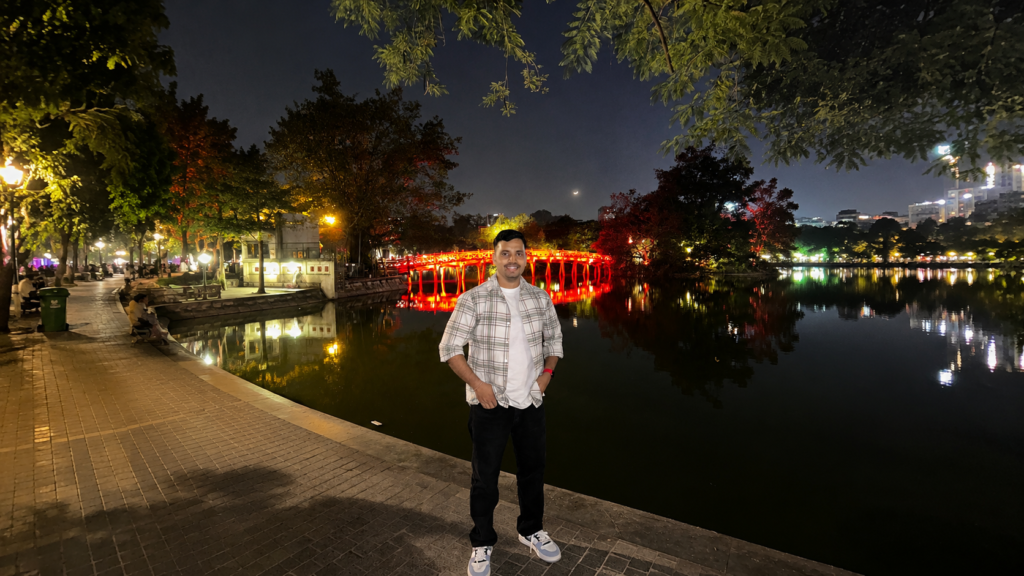
Hoan Kiem Lake — the Lake of the Restored Sword — sits at the heart of Hanoi’s Old Quarter and is the city’s most iconic landmark. Its name derives from a 15th-century legend in which Emperor Le Loi, having driven out the Ming invaders with a magical sword, returned the weapon to a giant golden turtle living in the lake. The small Ngoc Son Temple on the northern island and the scarlet Huc Bridge connecting it to the shore have made the lake a symbol of the city for generations of Hanoians and visitors alike.
Circling the lake on foot takes around 30 minutes at a relaxed pace and is best done on weekend evenings when the surrounding streets are closed to traffic, filling with street performers, chess players, and food stalls. The lakeside atmosphere is calm by day and lively by night — one of the few places in Hanoi where the pace genuinely slows down.
- Neighbourhood: Old Quarter
- Entry Fee: Free
- Opening Timings: Open 24 hours
- How to Get There: Central Old Quarter — walkable from most hostels and guesthouses in the area
- Duration: 45 minutes
Old Quarter
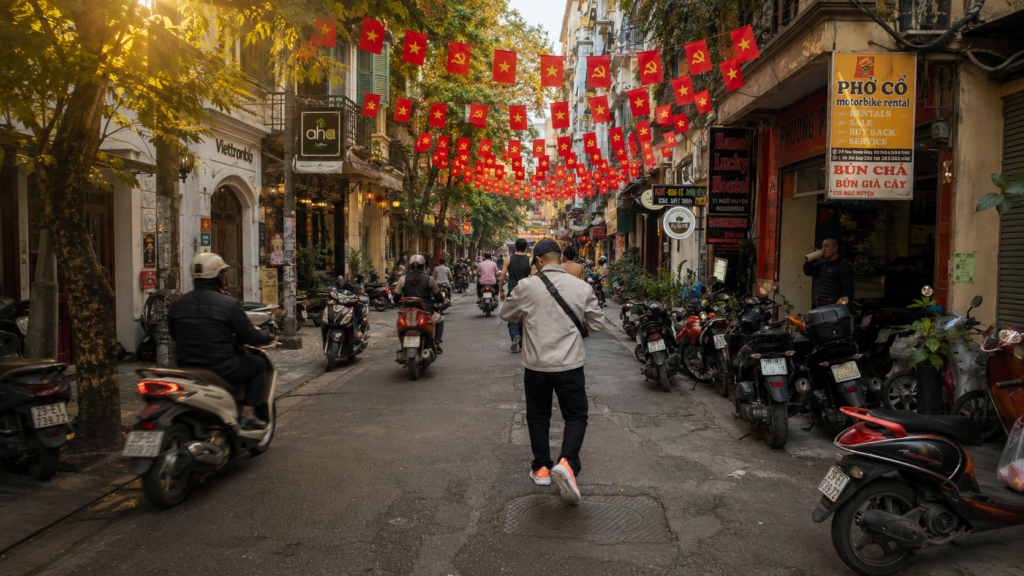
The Old Quarter is Hanoi’s oldest commercial district, a single square kilometre of narrow streets that has functioned as the city’s trading heart since the 15th century. Each of its 36 streets was traditionally named for the craft or material sold there — Hang Bac for silver, Hang Gai for silk, Hang Ma for paper goods — and traces of those specialisations survive today alongside the hostels, cafés, and souvenir shops that now fill the same lanes.
Walking the Old Quarter without a fixed plan is the most rewarding approach. The streets are best explored on foot at a slow pace, particularly in the early morning before the motorbike traffic builds and in the evening when street food vendors set up on the pavement. The bia hoi corner — the intersection of Ta Hien and Luong Ngoc Quyen — is one of the most memorable spots in the city: plastic stools, cold draught beer, and a crowd of locals and travellers sharing the same narrow stretch of road.
- Neighbourhood: Old Quarter
- Entry Fee: Free
- Opening Timings: Streets open 24 hours; pedestrian zone Fri–Sun from 7pm
- How to Get There: Begins immediately north of Hoan Kiem Lake — the entire district is walkable
- Duration: 2–3 hours
Ho Chi Minh Mausoleum
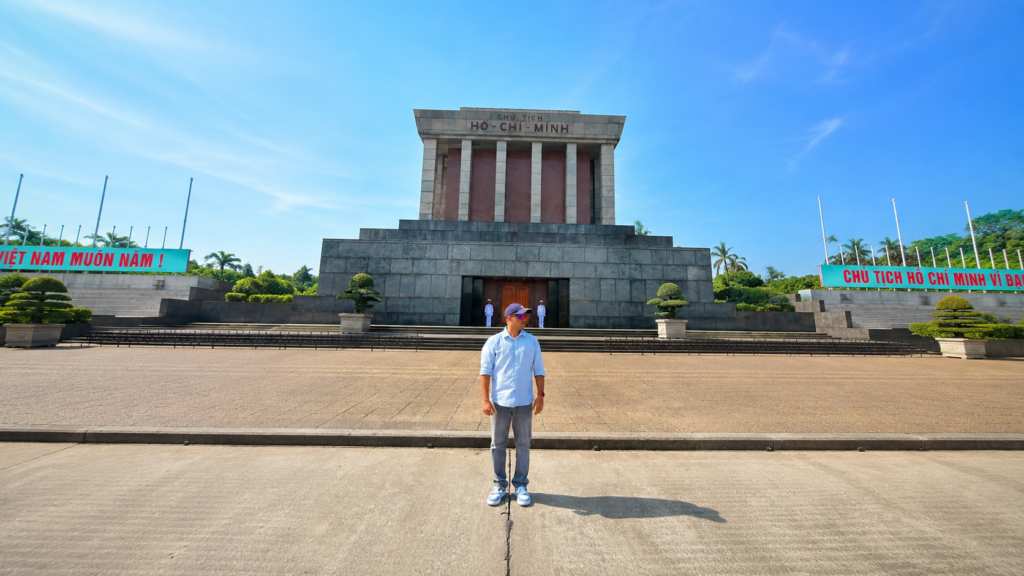
The Ho Chi Minh Mausoleum stands in Ba Dinh Square, the site where Ho Chi Minh declared Vietnam’s independence from France on 2 September 1945. Built between 1973 and 1975 following his death in 1969 — against his personal wish to be cremated — the grey granite structure houses his embalmed body in a glass sarcophagus, guarded by a military honour guard around the clock. For Vietnamese visitors, the queue to pay respects is often hours long; for international travellers, it remains one of the most significant political landmarks in Southeast Asia.
The visit is tightly regulated: no photography inside, shoulders and knees must be covered, and silence is expected throughout. The surrounding Ba Dinh complex also includes the Ho Chi Minh Museum, the One Pillar Pagoda, and Ho Chi Minh’s Stilt House — all within easy walking distance, making it straightforward to combine all four in a single morning.
- Neighbourhood: Ba Dinh
- Entry Fee: Free
- Opening Timings: 8am–11am Tue–Thu and Sat–Sun; closed Mon and Fri; also closed Oct–Nov while the body is in Russia for maintenance
- How to Get There: Ba Dinh district — 10 min by Grab from the Old Quarter; 30 min walk from Hoan Kiem Lake
- Duration: 1 hour (including queuing time)
Temple of Literature
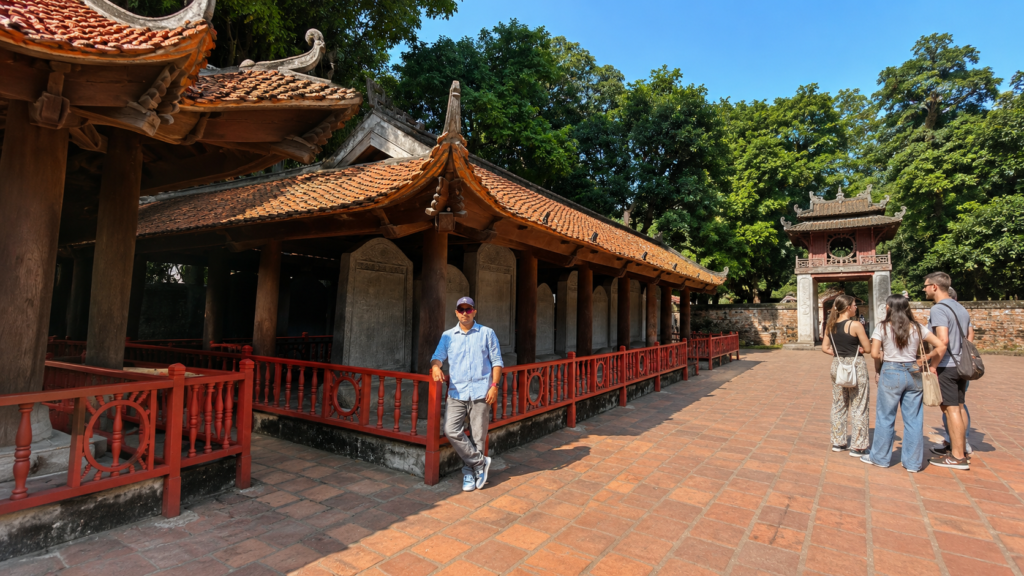
The Temple of Literature — Van Mieu Quoc Tu Giam — is Vietnam’s first university, founded in 1070 under Emperor Ly Thanh Tong as a Confucian temple and later expanded into a centre of learning that trained the country’s imperial mandarins for over 700 years. Located in the Ba Dinh district, the complex is one of the best-preserved examples of traditional Vietnamese architecture in the country, spread across five interconnected courtyards separated by ornate gateways.
The third courtyard’s 82 stone doctoral steles — each mounted on the back of a stone tortoise and inscribed with the names of laureates from examinations held between 1484 and 1779 — are the standout feature, now recognised as a UNESCO Memory of the World. The complex feels genuinely contemplative; the koi-filled ponds, pavilions, and covered corridors give it a very different quality to Hanoi’s busier landmarks. Allow at least an hour to move through all five courtyards without rushing.
- Neighbourhood: Ba Dinh
- Entry Fee: 70,000 VND (~$3)
- Opening Timings: 8am–5pm daily (last entry 4:30pm)
- How to Get There: Ba Dinh district — 10 min by Grab from Hoan Kiem Lake; entrance on Quoc Tu Giam Street
- Duration: 1–1.5 hours
Hoa Lo Prison
Hoa Lo Prison was built by French colonial authorities in 1896 to hold Vietnamese political prisoners and became one of the most feared detention facilities in Indochina. American prisoners of war held here during the Vietnam War sardonically nicknamed it the “Hanoi Hilton.” Today only a small section of the original structure remains — much of it was demolished in the 1990s to make way for the Hanoi Tower skyscraper — but the preserved museum portion contains some of the most sobering exhibits in the city, covering both the colonial-era conditions and the American POW period.
The contrast between the two eras depicted inside is striking: the French colonial wing documents mass imprisonment and resistance through original shackles, cells, and photographs, while the American section presents a notably more sanitised picture of POW life. The colonial wing is by far the more affecting of the two. The museum is compact but dense with content — allow at least an hour, and consider the optional guidebook at the entrance for context the signage alone does not always provide.
- Neighbourhood: Hoan Kiem
- Entry Fee: 30,000 VND (~$1.20); optional guidebook 30,000 VND (~$1.20)
- Opening Timings: 8am–5pm daily
- How to Get There: Hoan Kiem district — 10 min walk southwest of Hoan Kiem Lake; address: 1 Hoa Lo Street
- Duration: 1–1.5 hours
Hanoi Train Street
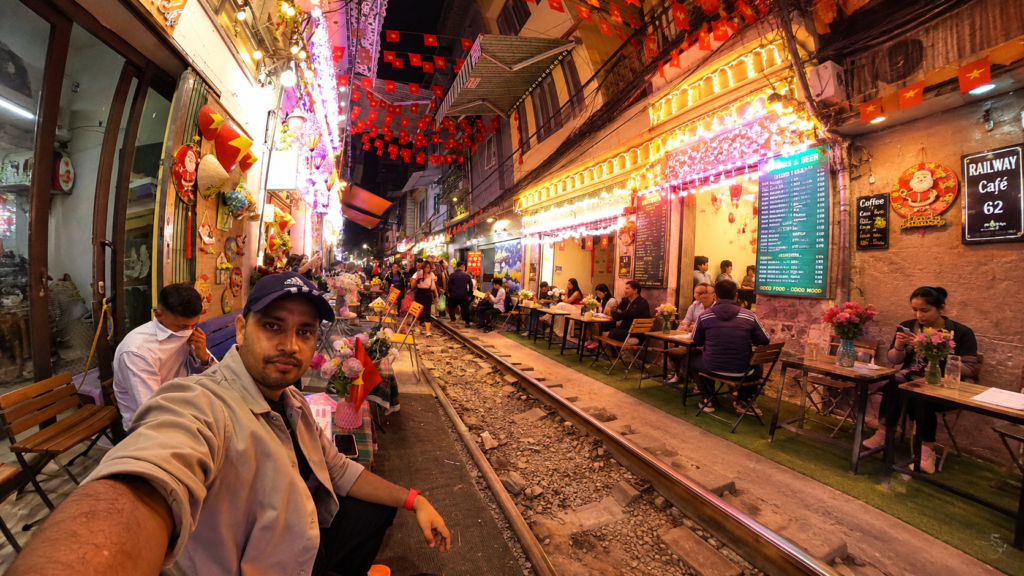
Train Street is a narrow residential alley where an active railway line passes within arm’s reach of café tables, potted plants, and house façades. Twice daily, a train from Hanoi Station runs through the alley — at which point café staff clear the tables, guests press flat against the walls, and the train passes at low speed with inches to spare. Between trains, the alley fills with travellers and photographers making the most of its distinctly photogenic setting.
The cafés lining both sides require a minimum spend — typically 40,000–60,000 VND for a drink — as an entry condition for a good viewing spot. Egg coffee and Vietnamese iced coffee are the standard orders. Check the train schedule before you go; trains from Hanoi Station run on time, while return trains are less predictable. The best-known section is on Ngo 224 Le Duan Street, slightly south of the main Old Quarter cluster.
- Neighbourhood: Old Quarter
- Entry Fee: Free (café minimum spend ~40,000 VND / ~$1.60)
- Opening Timings: Cafés open from around 7am; trains pass approximately 7:30am, 3:30pm, 5:30pm, and 7:30pm — verify locally as schedules change
- How to Get There: Old Quarter — on Ngo 224 Le Duan Street, 15 min walk south of Hoan Kiem Lake
- Duration: 30–45 minutes
St Joseph Cathedral
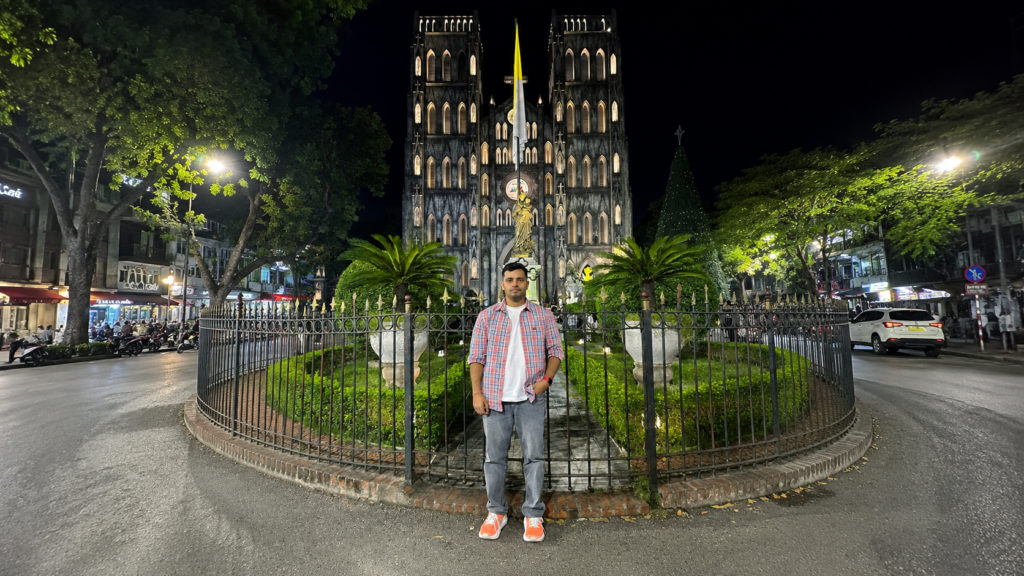
St. Joseph’s Cathedral is Hanoi’s most prominent example of French colonial religious architecture, completed in 1886 and modelled on the Neo-Gothic style of Notre-Dame de Paris, right down to its twin bell towers and pointed arch windows. It was built on the site of the Bao Thien Pagoda and became the seat of the Archdiocese of Hanoi. Despite Vietnam being one of the least religiously observant countries in Southeast Asia, the cathedral draws large Catholic congregations — Sunday Mass regularly spills onto the square outside.
The exterior is the main draw for most visitors, particularly in the evening when the illuminated façade creates a striking contrast against the narrow lanes of Nha Tho Street surrounding it. The interior is open during Mass hours and features stained glass and religious statuary worth seeing if you time your visit accordingly. The streets around the cathedral — known locally as the Cathedral Quarter — are lined with independent cafés and boutique shops and are a pleasant area to explore on foot.
- Neighbourhood: Hoan Kiem
- Entry Fee: Free
- Opening Timings: Open for visits 8am–noon and 2pm–6pm daily; Mass times vary
- How to Get There: Hoan Kiem district — 5 min walk west of Hoan Kiem Lake; on Nha Chung Street
- Duration: 30 minutes
Ngoc Son Temple
Ngoc Son Temple — the Temple of the Jade Mountain — sits on a small island at the northern end of Hoan Kiem Lake, connected to the shore by the bright red Huc Bridge (the Rising Sun Bridge). The temple was originally built in the 18th century and dedicated to the scholar Saint Van Xuong and the military hero General Tran Hung Dao, who repelled the Mongol invasions of the 13th century. It was significantly restored in 1865 by the Confucian scholar Nguyen Van Sieu, who added the iconic Thap But ink-brush tower at the entrance.
The interior is compact but genuinely atmospheric, housing the preserved body of a large freshwater tortoise recovered from Hoan Kiem Lake — believed by many to be a descendant of the turtle from the lake’s founding legend. The temple is small enough to visit in under 30 minutes but feels distinct from the surrounding lakeside bustle. It is best visited in the morning before crowds arrive, or on a weekday when the pedestrian zone around the lake is quieter.
- Neighbourhood: Old Quarter
- Entry Fee: 30,000 VND (~$1.20)
- Opening Timings: 8am–5pm daily
- How to Get There: Located on an island in Hoan Kiem Lake — access via the Huc Bridge on the lake’s northern shore
- Duration: 30–45 minutes
Hanoi Opera House
The Hanoi Opera House was built between 1901 and 1911 by French colonial architects and remains one of the finest examples of neoclassical French architecture in Vietnam. Modelled loosely on the Palais Garnier in Paris, the building features a colonnaded façade, tiled mansard roof, and elaborate interior that has hosted the Vietnam Symphony Orchestra, the National Ballet, and international touring performances since its full restoration in 1997. It stands at the eastern edge of the French Quarter, flanked by wide tree-lined boulevards that retain much of their colonial character.
The exterior is striking and worth seeing even without attending a performance — the square in front is a popular gathering point in the evenings. For those interested in the interior, tickets to performances start from around 200,000 VND and the calendar typically includes traditional Vietnamese music, classical concerts, and opera. Check the schedule in advance as performances sell out, particularly on weekends.
- Neighbourhood: French Quarter
- Entry Fee: Free (exterior); performance tickets from 200,000 VND (~$8)
- Opening Timings: Exterior accessible anytime; box office open 8am–8pm on performance days
- How to Get There: French Quarter — on August Revolution Square; 10 min walk east of Hoan Kiem Lake
- Duration: 30 minutes (exterior); 2–3 hours (performance)
One Pillar Pagoda
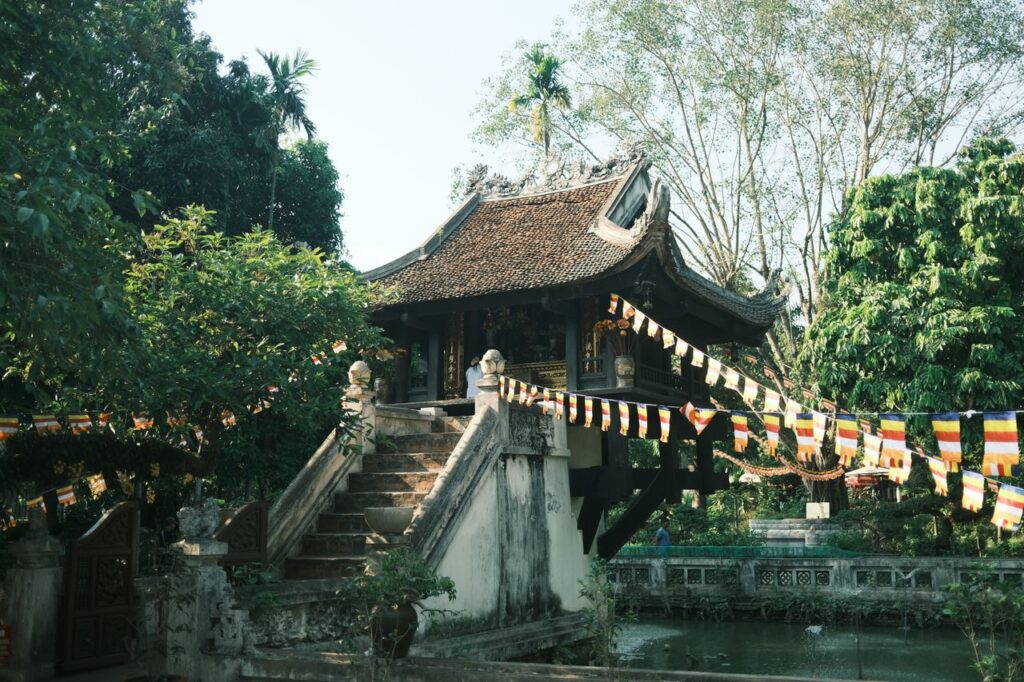
The One Pillar Pagoda is one of Vietnam’s most recognisable religious structures — a small wooden pagoda built on a single stone pillar rising from a lotus pond, designed to resemble a lotus blossom emerging from the water. It was first constructed in 1049 by Emperor Ly Thai Tong, who according to legend dreamed of the Goddess of Mercy presenting him with a son while seated on a lotus throne. The pagoda was destroyed by French forces upon their withdrawal from Hanoi in 1954 and subsequently rebuilt in the same form shortly after.
Despite its small scale, the One Pillar Pagoda carries significant symbolic weight in Vietnamese Buddhism and culture. It sits within the broader Ba Dinh complex, a two-minute walk from the Ho Chi Minh Mausoleum — making it a natural addition to any itinerary that includes the mausoleum, the Ho Chi Minh Museum, and the Stilt House. The visit itself is brief but the structure is genuinely unusual and worth the short detour.
- Neighbourhood: Ba Dinh
- Entry Fee: Free
- Opening Timings: 8am–5pm daily
- How to Get There: Ba Dinh district — 2 min walk from the Ho Chi Minh Mausoleum; easily combined with the full Ba Dinh complex
- Duration: 20 minutes
Tran Quoc Pagoda
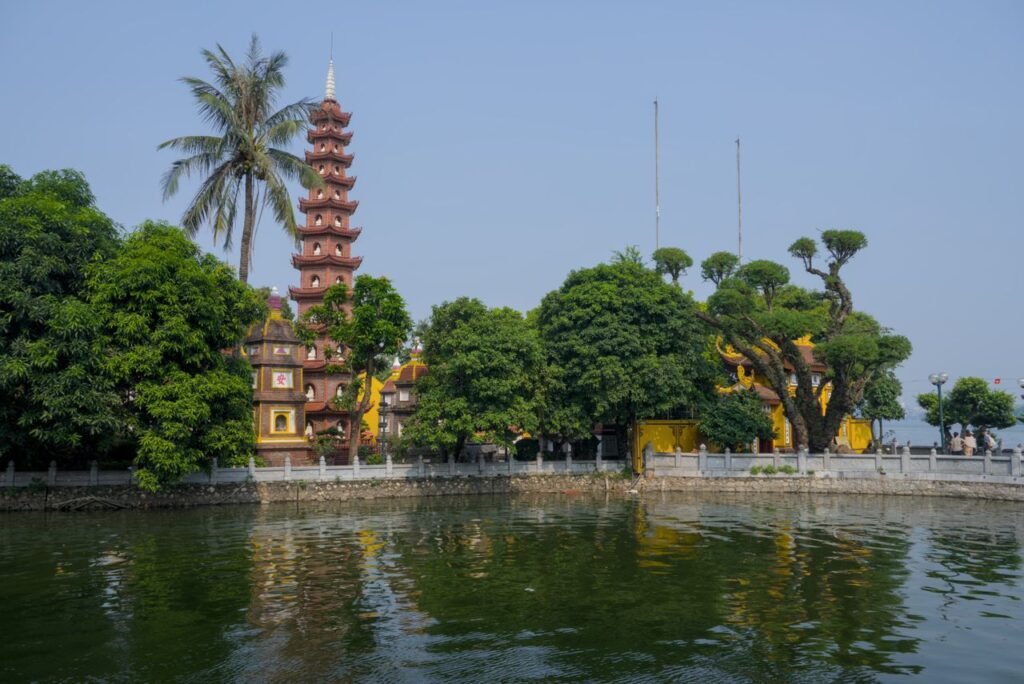
Tran Quoc Pagoda is the oldest pagoda in Hanoi, originally built in the 6th century during the reign of Emperor Ly Nam De on the banks of the Red River before being relocated to its current position on a small peninsula jutting into West Lake in 1615. The complex features a 15-metre brick stupa dating from 1815, surrounded by bodhi trees, lotus ponds, and smaller shrine buildings. A bodhi tree grown from a cutting said to originate from the tree under which the Buddha attained enlightenment was planted here in 1959 by Indian Prime Minister Nehru during a state visit.
The pagoda’s setting on West Lake makes it one of the more scenic religious sites in Hanoi, with good views across the water particularly in the late afternoon. It remains an active place of worship and draws Vietnamese devotees as well as tourists. The area around West Lake is noticeably quieter than the Old Quarter and makes for a pleasant excursion paired with a walk or cycle around the lake’s perimeter.
- Neighbourhood: Tay Ho
- Entry Fee: Free
- Opening Timings: 7:30am–6pm daily
- How to Get There: Tay Ho district — on Thanh Nien Road between West Lake and Truc Bach Lake; 20 min by Grab from the Old Quarter
- Duration: 30 minutes
Imperial Citadel of Thang Long
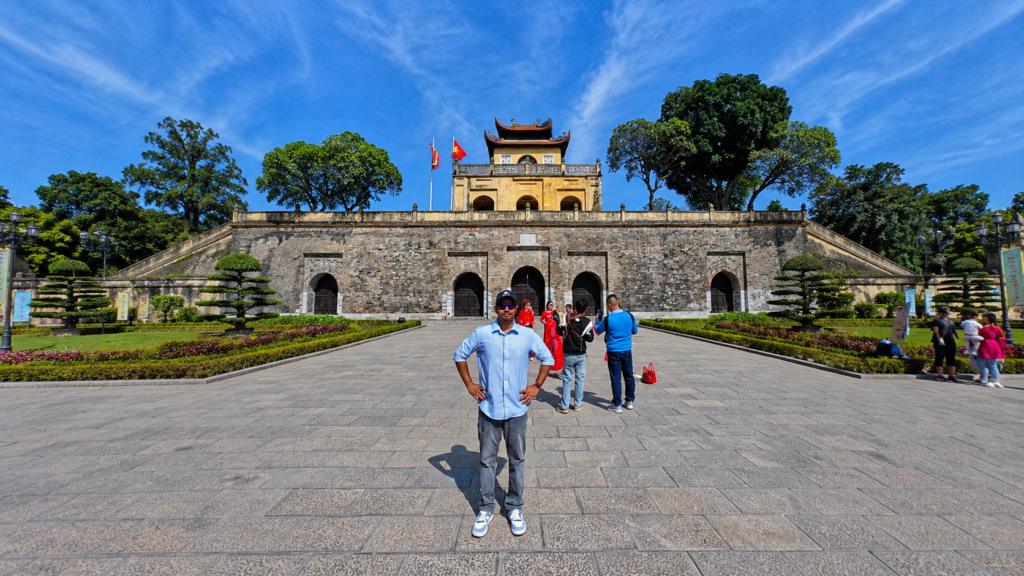
The Imperial Citadel of Thang Long is a UNESCO World Heritage Site that served as the political centre of Vietnam for nearly a thousand years, from its founding in 1010 under Emperor Ly Thai To through successive dynasties until the early 19th century when the capital shifted to Hue. The site encompasses the remains of royal palaces, gate towers, gardens, and an extensive system of underground bunkers used by the Vietnamese military command as recently as the Vietnam War — one of the most unusual overlaps of ancient and modern history anywhere in Southeast Asia.
The surface structures include the Doan Mon (South Gate), the Kinh Thien Palace foundation platform, and the Hau Lau (Princess Pagoda), while the underground D67 bunker complex used by General Vo Nguyen Giap is one of the most striking exhibits on the site. Allow at least 90 minutes to cover the outdoor grounds and key interior spaces; the on-site museum provides useful historical context that the grounds themselves do not always explain clearly.
- Neighbourhood: Ba Dinh
- Entry Fee: 30,000 VND (~$1.20)
- Opening Timings: 8am–5pm Tue–Sun; closed Mon
- How to Get There: Ba Dinh district — on Hoang Dieu Street; 5 min walk from the Ho Chi Minh Mausoleum
- Duration: 1–1.5 hours
Vietnam Military History Museum

The Vietnam Military History Museum covers the full arc of Vietnam’s military conflicts from the resistance against French colonialism through the American War and the subsequent border conflicts with China and Cambodia. The outdoor display is arguably the most striking element — a large courtyard filled with captured American aircraft, tanks, artillery pieces, and military hardware arranged around a central flagpole. The indoor galleries document each phase of conflict through weapons, maps, photographs, and personal effects, presented from an unambiguously Vietnamese perspective.
The museum sits adjacent to the Flag Tower of Hanoi (Cot Co), a 33-metre tower built in 1812 that survived the French colonial demolition of the citadel and remains one of the few intact structures from that era. The combination makes for a genuinely absorbing visit, particularly for those with an interest in 20th-century history. The outdoor aircraft display — which includes a partially reconstructed B-52 — is worth the entrance fee on its own.
- Neighbourhood: Ba Dinh
- Entry Fee: 40,000 VND (~$1.60)
- Opening Timings: 8am–11:30am and 1pm–4:30pm Tue–Sun; closed Mon
- How to Get There: Ba Dinh district — on Dien Bien Phu Street; 10 min walk from the Imperial Citadel of Thang Long
- Duration: 1–1.5 hours
Vietnam Museum of Ethnology
The Vietnam Museum of Ethnology is dedicated to Vietnam’s 54 officially recognised ethnic groups, presenting their customs, dress, tools, and religious practices through an extensive indoor collection alongside a large outdoor architectural park. Opened in 1997 in the Cau Giay district, it sits well outside the usual Old Quarter and Ba Dinh sightseeing cluster, which keeps it noticeably quieter than most of Hanoi’s central landmarks despite being one of the most highly rated museums in the country.
The outdoor grounds are the highlight for most visitors — full-scale reconstructed houses from groups including the Ede, Tay, and H’mong, arranged across landscaped gardens that visitors can walk through and enter. The indoor galleries cover marriage customs, funeral rites, textiles, and daily tools in detail that most standard city-guide content overlooks entirely. Allow at least ninety minutes for the outdoor park alone, more if the indoor exhibits are of particular interest.
- Neighbourhood: Cau Giay
- Entry Fee: 40,000 VND (~$1.60)
- Opening Timings: 8:30 am–5:30 pm, Tue–Sun; closed Mon
- How to Get There: Cau Giay district — on Nguyen Van Huyen Street, around 8km from the Old Quarter; 20–30 min by Grab, or Bus 14 direct from Hoan Kiem Lake
- Duration: 1.5–3 hours
Thong Nhat Park
Thong Nhat Park — Reunification Park — is Hanoi’s largest public green space, built in the late 1950s around the artificial Bay Mau Lake in the Hai Ba Trung district. Unlike the more commercial character of the surrounding district, the park functions as an everyday recreational space for local residents rather than a tourist attraction, which makes it one of the more genuine glimpses of ordinary Hanoian life available in the city.
Mornings are the best time to visit, when locals gather for group exercise, badminton, and tai chi around the lake before the heat sets in. Paddleboats are available for rent on Bay Mau Lake, and the park’s tree cover makes it a workable midday escape from Hanoi’s traffic and heat between other sightseeing stops. There is little in the way of formal attractions inside the park itself — its value is the pace and the people rather than any single landmark.
- Neighbourhood: Hai Ba Trung
- Entry Fee: Free
- Opening Timings: 5 am–10 pm daily
- How to Get There: Hai Ba Trung district — on Tran Nhan Tong Street, around 3km south of Hoan Kiem Lake; 10–15 min by Grab
- Duration: 1–2 hours
Things to Do in Hanoi
| Activity | Experiences | Neighbourhood | Price Range | Duration |
|---|---|---|---|---|
| Street Food Tour | Iconic, Food | Old Quarter | $20–$40 | 3–4 hrs |
| Water Puppet Show | Iconic, Cultural, Kid-Friendly | Old Quarter | $4–$8 | 50 min |
| Ha Long Bay Day Trip | Adventure/Outdoor | Outside Hanoi | $55–$150 | Full day |
| Ninh Binh Day Tour | Adventure/Outdoor | Outside Hanoi | $30–$50 | Full day |
| Vespa / Scooter Tour | Under-the-Radar, Solo/Social | Old Quarter (starts) | $25–$45 | 3–4 hrs |
| Old Quarter Walking Tour | Cultural, Solo/Social | Old Quarter | $10–$25 | 3–4 hrs |
| Vietnamese Cooking Class | Food, Cultural | Old Quarter | $30–$55 | 3–4 hrs |
| Cyclo Ride | Under-the-Radar | Old Quarter | $5–$15 | 1 hr |
| Jeep / Vintage Army Tour | Under-the-Radar | Old Quarter (starts) | $35–$60 | 3–4 hrs |
| Bat Trang Ceramic Village | Kid-Friendly, Under-the-Radar, Shopping | Outside Hanoi | $15–$30 | Half day |
Street Food Tour
A guided street food tour is one of the most efficient ways to cover Hanoi’s food scene in a single evening, removing the guesswork of finding the right stalls and providing context that wandering alone rarely delivers. Most tours run for three to four hours from early evening and cover five to eight stops across the Old Quarter and surrounding neighbourhoods — pho, bun cha, banh mi, egg coffee, and bia hoi (fresh draught beer) appear on most itineraries, with some operators adding lesser-known dishes like banh cuon (steamed rice rolls) or chao suon (pork rib porridge).
Small-group formats capped at eight to ten people make for a noticeably better experience than large coach-based tours — the guide can move quickly between stops and take you into alleyways and side streets that bigger groups cannot access. Evening tours starting around 5pm–6pm catch the stalls at full capacity and the streets at their most atmospheric. Book in advance during peak season as popular operators fill up several days ahead.
- Experience: Iconic, Food
- Price Range: $20–$40 per person
- Duration: 3–4 hours
- Book via: Klook / GetYourGuide
Water Puppet Show
Water puppetry is an art form unique to northern Vietnam, originating in the Red River Delta over a thousand years ago when performances took place in flooded rice paddies. Today the most accessible venue is the Thang Long Water Puppet Theatre on the northern shore of Hoan Kiem Lake, which runs multiple shows daily. Performers stand waist-deep behind a bamboo curtain, manipulating lacquered wooden puppets on the water’s surface using submerged rods — a technique that conceals all the mechanics of movement. Each 50-minute show covers scenes from Vietnamese folklore, rice farming, dragon dances, and historical battles, accompanied by a live traditional orchestra playing dan bau, trong drums, and wooden flutes.
The show is worth attending even if the performance is entirely in Vietnamese — the puppets, music, and water effects communicate clearly without translation. Front rows offer the clearest view of the puppet mechanics but receive a light spray; middle rows are generally the better trade-off. Evening performances fill quickly, particularly the 6pm and 7:30pm slots — book at least a few hours ahead during peak season.
- Experience: Iconic, Cultural, Kid-Friendly
- Price Range: $4–$8 per person depending on seat tier
- Duration: 50 minutes
- Book via: Klook
Ha Long Bay Day Trip
Ha Long Bay is Vietnam’s most celebrated natural landscape — a UNESCO World Heritage Site in the Gulf of Tonkin comprising over 1,600 limestone karst islands rising from emerald-green water, dotted with caves, floating fishing villages, and hidden lagoons. As a day trip from Hanoi it covers roughly 170 kilometres each way, with most operators running coach transfers to the port at Tuan Chau or Hon Gai before boarding a junk boat for a four-to-five-hour cruise. A standard itinerary includes a cave visit (usually Sung Sot or Thien Cung), kayaking in a sheltered lagoon, a seafood lunch on board, and time on Ti Top or Titov Island beach.
A day trip gives a genuine taste of the bay but the experience is compressed — two nights on an overnight cruise is the recommended format for anyone wanting to reach quieter areas and see the bay at dawn. That said, for travellers with limited time or budget, a well-organised day cruise is a reasonable introduction. Prices vary significantly with boat quality; the mid-range options around $70–$100 tend to offer the best balance of comfort and itinerary coverage.
- Experience: Adventure/Outdoor
- Price Range: $55–$150 per person
- Duration: Full day (approx. 12–13 hours including transfers)
- Book via: Klook
Ninh Binh Day Tour
Ninh Binh Province, around 90 kilometres south of Hanoi, is often described as Ha Long Bay on land — a landscape of limestone karst peaks rising from rice paddies and slow-moving rivers that draws comparisons with the bay but at a fraction of the crowds. A standard day tour from Hanoi covers two to three key sites: Hoa Lu (the 10th-century royal citadel and ancient capital of Vietnam), a rowing boat trip through the cave-threaded waterways at Trang An or Tam Coc, and the climb to Mua Cave viewpoint, whose 500-step ascent yields a panoramic view across the entire valley that is among the most photographed in northern Vietnam.
Most organised tours include return transport from Hanoi, an English-speaking guide, and a Vietnamese lunch, making the logistics straightforward. The journey takes around two hours each way depending on traffic, so departures are typically early — expect a 7am–8am pick-up. Those with more time would do well to stay overnight in Ninh Binh itself, which allows a more relaxed pace across the same sites and access to the Bich Dong Pagoda and Van Long Nature Reserve that day tours rarely reach.
- Experience: Adventure/Outdoor
- Price Range: $30–$50 per person
- Duration: Full day (approx. 11–12 hours including transfers)
- Book via: Klook / GetYourGuide
Vespa / Scooter Tour
A guided scooter or Vespa tour is one of the most effective ways to cover Hanoi’s neighbourhoods quickly while experiencing the city from the perspective that locals actually use — the back of a motorbike. Most tours pair each guest with a local guide on a vintage Vespa or a modern scooter and run for three to four hours, passing through the Old Quarter backstreets, along the Red River embankment, across Long Bien Bridge, through the French Quarter, and out to quieter residential areas that rarely feature on standard walking itineraries. Evening food tours on the back of a Vespa — combining movement with street food stops — are among the most consistently well-reviewed options on booking platforms.
The format works particularly well for solo travellers who want guided context without the pace of a group walking tour. Guides on these tours tend to be knowledgeable about both the historical significance and the everyday character of the places they pass through. Helmets are always provided; wear closed shoes and keep bags close in busy traffic.
- Experience: Under-the-Radar, Solo/Social
- Price Range: $25–$45 per person
- Duration: 3–4 hours
- Book via: Klook / GetYourGuide
Old Quarter Walking Tour
A guided walking tour of the Old Quarter offers structured insight into a district that can feel chaotic and opaque to first-time visitors on their own. Most tours cover the 36 trading streets, Dong Xuan Market, Hoan Kiem Lake, and one or two temples or pagodas in the area, with guides drawing on the district’s mercantile history, French colonial influence, and the stories behind specific streets and buildings. Some of the most popular options are led by students from local universities — typically priced at the lower end of the range — who bring genuine local knowledge and a conversational format that differs from scripted commercial tours.
Morning tours starting around 8am–9am catch the Old Quarter before the midday heat and before the streets fill with motorbikes and tourists. An evening tour starting around 5pm–6pm catches the district in a different register entirely — street food stalls open, the night market sets up along Hang Dao Street, and the pedestrian zone around Hoan Kiem Lake comes to life. Both time slots have merit depending on what you want from the experience.
- Experience: Cultural, Solo/Social
- Price Range: $10–$25 per person
- Duration: 3–4 hours
- Book via: GetYourGuide
Vietnamese Cooking Class
A Vietnamese cooking class in Hanoi typically begins with a visit to a local wet market — usually Dong Xuan or a smaller neighbourhood market — where the instructor walks participants through the ingredients that define northern Vietnamese cuisine: fresh herbs, fish sauce, pork bones for broth, rice paper, and the specific varieties of noodle used in dishes that outsiders often group together but locals distinguish carefully. The cooking session itself usually covers three to four dishes, commonly including pho, bun cha, fresh spring rolls, and one dessert, with participants preparing and eating each course in sequence.
Classes run in purpose-built kitchens as well as in the home kitchens of local families — the latter tend to offer a more personal experience and a better sense of how these dishes are actually made at home rather than in a restaurant context. Most classes run for three to four hours and end with a shared meal of everything prepared. Small group sizes are worth prioritising; classes of more than ten people can feel rushed at the preparation stations.
- Experience: Food, Cultural
- Price Range: $30–$55 per person
- Duration: 3–4 hours
- Book via: Klook / GetYourGuide
Cyclo Ride
A cyclo — a three-wheeled bicycle rickshaw with the passenger seated in a low chair at the front — was the dominant form of urban transport in Hanoi for much of the 20th century and remains one of the more relaxed ways to see the Old Quarter at close range. Passengers sit facing forward in the open air while the driver pedals from behind, passing through the narrow lanes of the 36 streets at a pace that allows for genuinely looking at the buildings, market displays, and street life rather than navigating through them. A standard circuit covers the main Old Quarter streets, Hoan Kiem Lake, and the French Quarter in around an hour.
Cyclo rides are best arranged directly with drivers found at the southern end of Hoan Kiem Lake or near the Hoan Kiem district hotels — negotiate the price and route before setting off. Most drivers speak limited English but communicate well enough for a basic itinerary. This is one of the few activities in Hanoi with no major Klook or GYG listing, so direct booking is the norm. Agree on a fixed price in VND before departure to avoid confusion at the end.
- Experience: Under-the-Radar
- Price Range: $5–$15 per person
- Duration: 1 hour
- Book via: Book directly with drivers at Hoan Kiem Lake — negotiate price before departure
Jeep / Vintage Army Tour
Hanoi jeep tours use restored Soviet-era GAZ-69 jeeps or vintage US Army jeeps — both of which saw active service in northern Vietnam during the 20th century — to take small groups through a circuit of city highlights and back-street neighbourhoods that standard tours don’t reach. The format typically covers the Old Quarter, the French Quarter, Train Street, the Long Bien Bridge area, and a selection of local eateries and viewpoints, with a guide riding alongside who provides historical context on the city’s wartime history as well as commentary on everyday Hanoian life. Evening departures are the most popular, catching the city as the street food scene opens and the bridges light up after dark.
The jeep tour format occupies a different register from both the walking tour and the Vespa tour — it covers more ground, fits two to four passengers per vehicle, and suits travellers who want a faster-paced city overview rather than a detailed neighbourhood deep-dive. Private options allow the route to be adjusted; shared tours follow a fixed itinerary. The vehicles themselves are a draw in their own right, particularly for those with an interest in the period history.
- Experience: Under-the-Radar
- Price Range: $35–$60 per person
- Duration: 3–4 hours
- Book via: GetYourGuide
Bat Trang Ceramic Village
Bat Trang is a traditional pottery village on the southern bank of the Red River, around 13 kilometres from central Hanoi, that has been producing ceramics continuously since the 15th century. The village’s kilns once supplied the royal court with fine glazed porcelain; today the same kilns produce everything from export-quality tableware to tourist-facing workshops where visitors can throw and paint their own pieces. The market at the village entrance sells a wide range of ceramics — bowls, vases, teapots, tiles — at prices well below what comparable pieces cost in the Old Quarter, making it one of the more practical shopping detours from Hanoi for anyone who can manage the carry-on weight.
The ceramic workshop experience — typically 90 minutes to two hours — involves hand-building or wheel-throwing a piece under the guidance of a local potter, painting it, and having it fired and sent to your accommodation if you cannot carry it. The journey from Hanoi takes around 30–40 minutes by Grab or local bus (Bus 47 from Long Bien Bus Station is the budget option at around 9,000 VND). A half-day from central Hanoi is enough to visit the market, complete a workshop, and eat lunch at one of the village restaurants.
- Experience: Kid-Friendly, Under-the-Radar, Shopping
- Price Range: $15–$30 per person (including workshop)
- Duration: Half day
- Book via: GetYourGuide
Hanoi rewards time and curiosity in equal measure. The places to visit in Hanoi span a thousand years of history — from the Confucian courtyards of the Temple of Literature and the solemnity of the Ho Chi Minh Mausoleum to the French colonial grandeur of the Opera House and the raw energy of the Old Quarter at night. Pair those landmarks with the city’s equally compelling activity scene — street food tours, water puppetry, cyclo rides through the 36 streets, day trips to Ninh Binh’s karst valleys — and Hanoi offers more depth than most travellers give it credit for.
Three days covers the essentials; five days lets you move at a pace that actually suits the city. For help planning where to base yourself during your stay, our Best Hostels in Hanoi guide covers the top accommodation options by neighbourhood and budget.
FAQ
Is Train Street in Hanoi still open to tourists?
Yes — Train Street is currently open. Authorities have attempted to restrict tourist access on several occasions since 2019 due to safety concerns, but cafés along the track continue to operate and the alley remains one of the most visited spots in the city. Check locally before visiting as the situation can change with short notice.
Is the Ho Chi Minh Mausoleum open year-round?
No. The mausoleum closes for approximately two months each year — typically from September or October through November — while Ho Chi Minh’s body is transported to Russia for preservation maintenance. It is also closed every Monday and Friday regardless of season. Check current opening status before planning your visit.
Do I need to book the Water Puppet Show in advance?
For evening performances at Thang Long Water Puppet Theatre — particularly the 6pm and 7:30pm shows — booking a day or two ahead is advisable during peak season (October to April). Walk-in tickets are often available for daytime shows and off-peak periods, but advance booking guarantees your preferred seat tier and avoids queuing at the box office.
What is the best area to stay in Hanoi for first-time visitors?
The Old Quarter is the most practical base for first-time visitors — it puts the majority of Hanoi’s top attractions within walking distance, has the highest concentration of budget accommodation, and keeps you close to the street food scene and Hoan Kiem Lake. The French Quarter is quieter and slightly more upmarket if you prefer less noise at night.
