Ninh Binh was the political capital of Vietnam during the Dinh and Le dynasties in the 10th and 11th centuries, centuries before Hanoi took on that role — a history still visible in the temples of Hoa Lu. The province is defined by limestone karst mountains rising out of flooded rice paddies, often compared to Halong Bay on land.
Most people visiting come for the best places to visit in Ninh Binh: gliding by sampan through Trang An or Tam Coc, climbing Hang Mua’s roughly 500 steps for its karst panorama, or exploring temples built into the cliffs. This guide covers those sights alongside the top things to do, from boat tours to cycling through the rice paddies, for a trip that goes beyond a rushed day tour from Hanoi.
9 Best Places to Visit in Ninh Binh
| Attraction | Type | Area | Entry Fee | Duration |
|---|---|---|---|---|
| Trang An | UNESCO Site | Trang An | 250,000 VND (~$10) | 2.5–3 hrs |
| Tam Coc | Landmark | Trang An | 150,000–200,000 VND (~$6–8) | 1.5–2 hrs |
| Hang Mua | Viewpoint | Tam Coc | 200,000 VND (~$8) | 1.5–2 hrs |
| Hoa Lu Ancient Capital | Historical Site | Hoa Lu District | 20,000 VND (~$0.80) | 45 min–1 hr |
| Bai Dinh Pagoda | Pagoda | Gia Vien District | Free (parking/cart extra) | 2–3 hrs |
| Bich Dong Pagoda | Pagoda | Tam Coc | Free | 30–45 min |
| Van Long Nature Reserve | Nature Reserve | Gia Vien District | 50,000–100,000 VND (~$2–4) | 1.5–2 hrs |
| Thai Vi Temple | Temple | Tam Coc | Free | 20–30 min |
| Kenh Ga Hot Springs | Landmark | Gia Vien District | Check latest prices | 1–2 hrs |
| Cuc Phuong National Park | National Park | Nho Quan District- 45km away | 60,000 VND (~$2.60) | 6–7 hrs |
Trang An
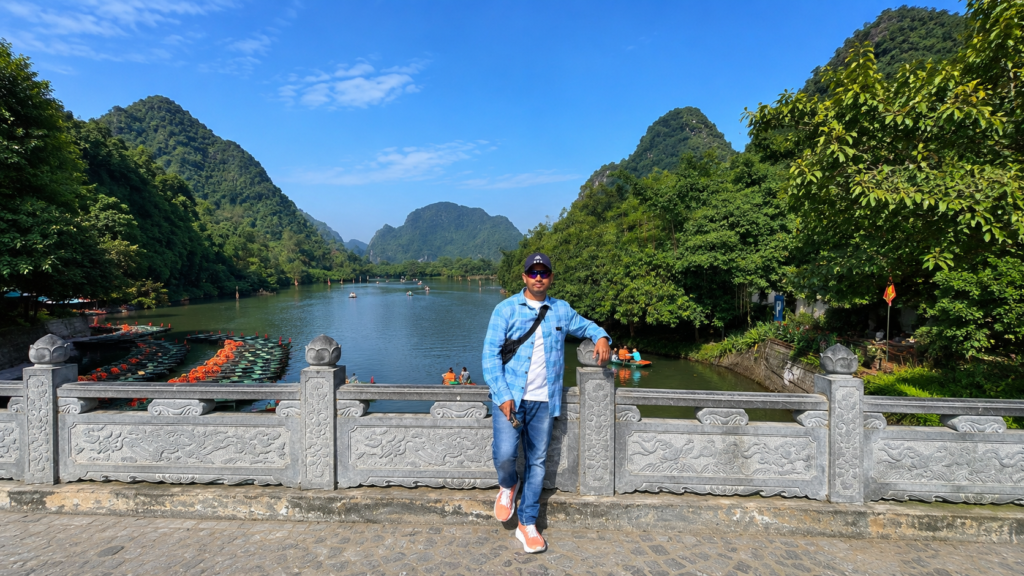
Trang An is a UNESCO World Heritage-listed landscape complex of limestone karsts, flooded caves, and rivers around 7 kilometres from Ninh Binh town. Inscribed in 2014, it’s one of Vietnam’s few mixed cultural and natural heritage sites, recognised for both its dramatic scenery and archaeological evidence of early human settlement dating back thousands of years. Alongside Tam Coc, it’s the reason many travellers plan their Ninh Binh itinerary around a boat tour in the first place.
Traditional sampan boats, rowed by local boatwomen who often use their feet, wind through several of Ninh Binh’s most famous caves and past floating temples tucked into the cliffs. Photography is restricted inside some temple stops, but the low cave passages and layered karst views make the roughly three-hour trip worth the early start.
- Entry Fee: 250,000 VND (~$10)
- Opening Timings: Boat dock generally open 7am–4:30pm daily
- How to Get There: About 7km from Ninh Binh town — taxi, Grab, or rented scooter
- Duration: 2.5–3 hours
Tam Coc
Tam Coc means “three caves”, named for the trio of limestone grottoes the Ngo Dong River cuts through on its way past the surrounding rice paddies. Long before Trang An opened to tourism, Tam Coc was Ninh Binh’s original boat-tour destination, and its small riverside town has grown into the province’s main backpacker base, with guesthouses, cafés and bike-rental shops lining the main street. It sits roughly 2 kilometres from central Ninh Binh, within easy cycling distance of several other attractions on this list.
The rice fields flanking the river turn a lush green through the summer and gold at harvest time around late September and October, framing the boat ride differently depending on when you visit. Rowers here have a reputation for expecting tips, so agree on this before setting off.
- Entry Fee: 150,000–200,000 VND (~$6–8)
- Opening Timings: Boat dock generally open 7am–5pm daily
- How to Get There: Central Tam Coc, about 2km from Ninh Binh town — walkable from most hostels or a short bike ride
- Duration: 1.5–2 hours
Hang Mua
Hang Mua, meaning “dancing cave”, is a limestone outcrop near Tam Coc topped by roughly 500 uneven stone steps leading up to a dragon-shaped statue and a small pagoda. Local legend holds that a 13th-century Tran-dynasty king used to watch dance performances at the foot of the mountain, which is how the site got its name. The small cave partway up gives the hill its literal title, though most visitors come for the climb rather than the cave itself.
I found the climb tougher than expected in Ninh Binh’s humidity, even setting off before 9am. The reward at the top is a sweeping view over the Tam Coc valley — winding river, rice paddies, and karst peaks stretching to the horizon — split between two viewpoints depending on which side of the ridge you take.
- Entry Fee: 200,000 VND (~$8)
- Opening Timings: Roughly 6:30am–6pm daily
- How to Get There: About 2km from Tam Coc — bike, scooter, or taxi
- Duration: 1.5–2 hours
Hoa Lu Ancient Capital
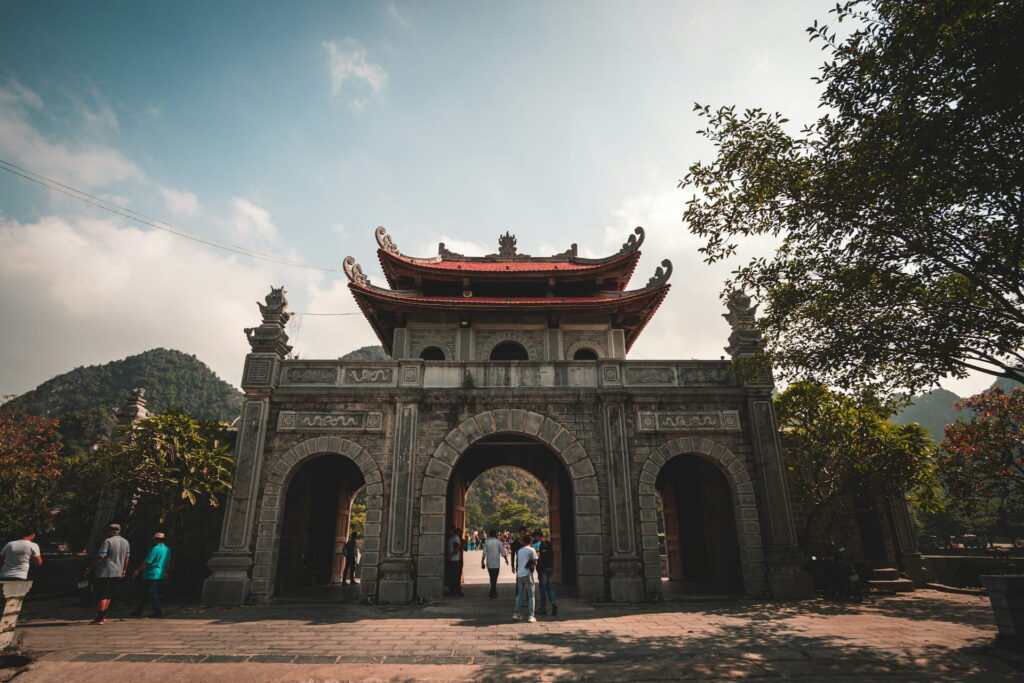
Hoa Lu served as Vietnam’s capital during the Dinh and early Le dynasties in the 10th and 11th centuries, before the seat of power moved to Thang Long — modern-day Hanoi. Protected by the same limestone karsts that draw visitors to Trang An next door, the site preserves temples dedicated to King Dinh Tien Hoang and King Le Dai Hanh, along with fragments of the old citadel walls. Compared with Trang An’s boat rides, this is Ninh Binh’s most direct link to the country’s early political history.
The temples themselves are compact and can be explored on foot in well under an hour, with far smaller crowds than the boat-tour sites nearby. It’s a straightforward stop to pair with Trang An, since both sit within the same protected landscape complex.
- Entry Fee: 20,000 VND (~$0.80)
- Opening Timings: Roughly 7:30am–5pm daily
- How to Get There: About 12km from Ninh Binh town, adjoining Trang An — scooter or taxi
- Duration: 45 minutes–1 hour
Bai Dinh Pagoda

Bai Dinh is among the largest Buddhist temple complexes in Southeast Asia, completed in 2010 next to the site of an older pagoda dating back centuries. The grounds hold a towering bronze Buddha statue, a multi-tier stupa, and a covered corridor lined with nearly 500 carved stone Arhat statues — on a scale that makes it one of the more visited Ninh Binh attractions for domestic pilgrims as much as foreign tourists.
The complex is huge and spread across several hills, so optional electric carts help cover ground between the stupa, the Buddha hall and the Arhat corridor. It gets especially busy during Tet and other Buddhist holidays, when pilgrims can outnumber tourists several times over.
- Entry Fee: Free to enter; parking around 40,000 VND (~$1.60) per vehicle, electric cart optional (~60,000 VND / ~$2.40 per person)
- Opening Timings: Roughly 6am–9pm daily
- How to Get There: About 15km from Ninh Binh town/Trang An — taxi or scooter
- Duration: 2–3 hours
Bich Dong Pagoda
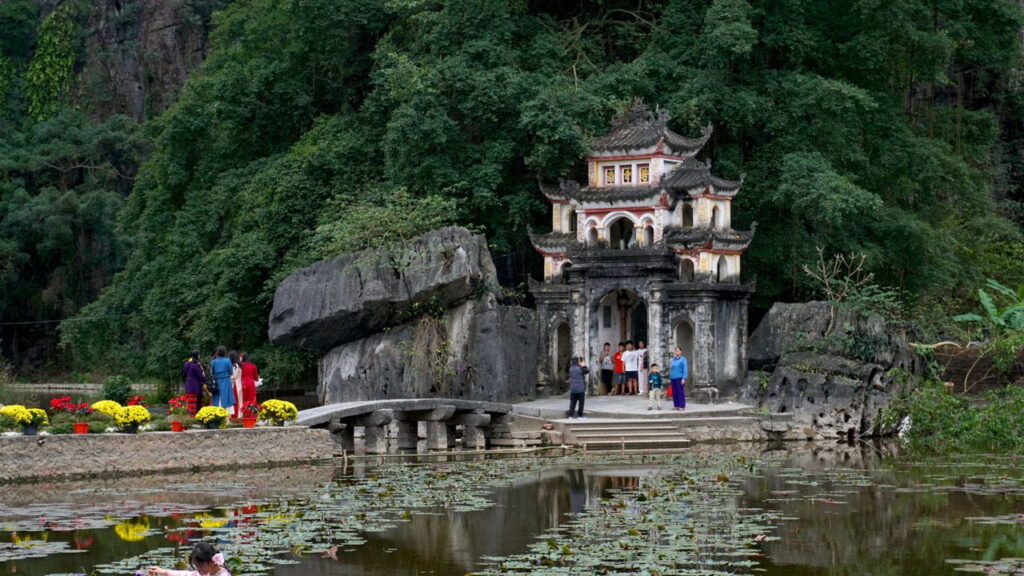
Bich Dong is a three-tiered pagoda complex built directly into a limestone cliff face a short ride west of Tam Coc, with structures dating back to the 18th century. A stone bridge crosses a lotus pond at the entrance, leading to the lower pagoda, before stairs climb through a narrow cave passage to the middle and upper shrines higher up the mountainside. Some guides call it the “second most beautiful cave” in Vietnam, though the setting is really the draw rather than any single feature.
The walk up is short and easy compared with Hang Mua, and it’s noticeably quieter — most visitors passing through Tam Coc skip it in favour of the boat ride, leaving the upper terraces peaceful even at midday.
- Entry Fee: Free (small bike/scooter parking fee may apply)
- Opening Timings: Roughly 7am–5:30pm daily
- How to Get There: About 2km west of Tam Coc — bike, scooter, or on foot
- Duration: 30–45 minutes
Van Long Nature Reserve
Van Long is Ninh Binh’s largest wetland nature reserve, spread across limestone karst scenery around 25 kilometres from Tam Coc. It’s best known as a refuge for the Delacour’s langur, one of the world’s rarest primates, alongside black-faced spoonbills and other wetland birds — making it more of a wildlife stop than a temple or history one. Because it sees a fraction of the visitors that Trang An or Tam Coc do, it’s a reasonable pick for anyone who’d rather skip the queues at the main boat docks.
The rowboats here move slowly and quietly across still water, with karst peaks reflected on the surface — a calmer contrast to the more crowded rides elsewhere. Bring binoculars if birdwatching is the goal, since sightings aren’t guaranteed.
- Entry Fee: 50,000–100,000 VND (~$2–4)
- Opening Timings: Roughly 7am–5pm daily
- How to Get There: About 25km from Tam Coc — scooter, taxi, or organised tour
- Duration: 1.5–2 hours
Thai Vi Temple
Thai Vi Temple, built in the 13th century, honours several rulers of the Tran Dynasty who are said to have retreated to this valley during a period of political upheaval. It’s modest by Ninh Binh’s temple standards — a simple stone courtyard rather than a sprawling complex — and sits tucked away from the main Tam Coc boat docks. The setting does more of the work than the architecture, with rice fields and a slow river marking most of the route in.
Getting there is arguably the highlight — a short ride or walk through rice paddies and along the riverbank rather than a busy road. It’s an easy add-on if you’re already exploring Tam Coc by bike.
- Entry Fee: Free
- Opening Timings: Roughly 7am–5pm daily
- How to Get There: About 3km from Tam Coc — bike or scooter through rice paddies
- Duration: 20–30 minutes
Kenh Ga Hot Springs
Kenh Ga is a floating village on the Hoang Long River in Gia Vien district, roughly 25 kilometres north of Ninh Binh town, known locally for natural hot springs fed by underground sources. It sees far fewer international visitors than Tam Coc or Trang An, and much of daily life here still revolves around the river rather than the road. It’s one of the few spots on this list where you’re more likely to share the water with locals than with other tourists.
When I visited, the warm mineral water was a welcome break after a day of cycling and climbing elsewhere in the province. A short boat ride past the floating houses and market boats rounds out the visit.
- Entry Fee: Check latest prices before visiting
- Opening Timings: Check latest official timings before visiting
- How to Get There: About 25km north of Ninh Binh town — scooter or taxi
- Duration: 1–2 hours
Cuc Phuong National Park
Cuc Phuong National Park is Vietnam’s oldest national park, established in 1962 in the Nho Quan district of Ninh Binh province. Spanning over 22,000 hectares of primary rainforest, it protects one of the country’s most biodiverse ecosystems, including the critically endangered Delacour’s langur, found nowhere else on Earth. The park is also home to a thousand-year-old tree with a 20-metre circumference, prehistoric caves showing evidence of human habitation dating back 7,000 years, and the Endangered Primate Rescue Centre, which cares for langurs and gibbons confiscated from illegal wildlife trade.
Unlike the karst-and-rice-paddy scenery that defines the rest of Ninh Binh, Cuc Phuong feels like genuine rainforest — dense canopy, ancient trees, and a noticeably different pace. One thing I noticed on the trek to the thousand-year-old tree is how quickly the crowds thin out once you’re twenty minutes past the visitor centre. A full day allows time for the Primate Rescue Centre, a cave, and at least one of the marked hiking trails.
- Entry Fee: 60,000 VND (~$2.60)
- Opening Timings: 7 am–8 pm daily
- How to Get There: Nho Quan District — around 45km / roughly 1 hour from Ninh Binh City or Tam Coc by car or motorbike; best visited with a private driver or organised day tour given the distance
- Duration: Full day recommended; a rushed round trip from Ninh Binh is possible in 6–7 hours
Things to Do in Ninh Binh
Hoa Lu, Trang An & Mua Cave Full-Day Tour
This is the single most popular way to see Ninh Binh in one day, especially for travellers based in Hanoi who don’t want to arrange transport themselves. Multi-stop itineraries typically combine three or four of the province’s biggest sites — usually some mix of Hoa Lu, Trang An or Tam Coc, Bai Dinh, and Mua Cave — with return transfers and lunch included. It’s the standard option offered by nearly every operator in Hanoi’s Old Quarter.
Expect a long day, generally 10 to 11 hours door to door, with a buffet lunch partway through and a guide narrating each stop. It covers more ground than visiting sites independently, though the trade-off is a fixed pace and less time to linger at any single spot.
- Price Range: $32–$95 per person
- Duration: 10–11 hours
- Book via: Klook / GetYourGuide
Trang An Boat Tour
Booking Ninh Binh’s most popular boat tour in advance through Klook or GetYourGuide cuts down on queueing at busy times and locks in the price before arrival. Options range from a shared seat on the standard Trang An route to private boat upgrades for smaller groups wanting more space and flexibility.
Early morning slots, generally before 9am, tend to have shorter queues and calmer water for photos. Booking ahead is worth it in peak season, from November to April, when weekend crowds can mean a long wait for a boat.
- Price Range: $10–$50 per person
- Duration: 2.5–3 hours
- Book via: Klook / GetYourGuide
Tam Coc Boat Ride
Tam Coc’s boat ride can be booked as a standalone ticket or bundled with a bike tour or a Bich Dong Pagoda stop through Klook or GetYourGuide, often better value than paying separately at the dock. Bundled tickets also come with clearer upfront pricing, avoiding the haggling some independent travellers report with dock-side rowers.
The ride itself takes 45 minutes to an hour on the water, within the wider 1.5 to 2 hour visit, gliding beneath low cave ceilings that require ducking at points — worth knowing if anyone in your group has mobility concerns.
- Price Range: $6–$15 per person
- Duration: 1.5–2 hours
- Book via: Klook / GetYourGuide
Rice Field Cycling & E-Bike Tour
Guided cycling and e-bike tours run through the back roads around Tam Coc, taking in rice paddies, water buffalo, and small villages that are easy to miss when sticking to the main tourist routes. Several operators pair the ride with a stop at a lesser-visited temple, such as Thai Vi, or a countryside lunch.
Riding in a small group with a local guide means less time squinting at a map and more time actually looking at the scenery, which is the main appeal over renting a bike solo. Most routes are flat and manageable for a moderate fitness level.
- Price Range: $30–$40 per person
- Duration: 3–4 hours
- Book via: Klook / GetYourGuide
Emperor of the Reeds Scenery Show
Staged against the Hoa Lu Ancient Capital backdrop, “Emperor of the Reeds” is an outdoor sound-and-light performance recreating scenes from Vietnam’s early dynastic history through live actors, music, and lighting effects. It’s a newer addition to Ninh Binh’s things to do, and one of the few evening options in a province that otherwise winds down early.
The show runs for about an hour after dark, with the karst hills lit up behind the stage adding to the atmosphere. It won’t appeal to everyone, but it’s a striking way to close out a day that would otherwise end with an early dinner.
- Price Range: $9–$12 per person
- Duration: About 1 hour
- Book via: Klook
Ninh Binh Night Market & Street Food Walk
Ninh Binh’s night market sets up along Tran Quang Dieu Street in the town centre, with stalls selling local snacks, handicrafts, and the region’s signature goat dishes from late afternoon into the evening. It’s a low-key contrast to the daytime boat tours and karst hikes that dominate most Ninh Binh itineraries.
Wandering the market independently costs nothing beyond whatever you eat, though guided food walks are also bookable through GetYourGuide for anyone who’d rather have a local point out which stalls are worth queuing for.
- Price Range: Free entry; guided walks from $25 per person
- Duration: 3–3.5 hours (guided walk)
- Book via: GetYourGuide
Motorbike or Scooter Self-Ride
Ninh Binh’s attractions are spread out enough that a rented motorbike or scooter is, for many independent travellers, the most practical way to see several sites in a day without relying on tours or taxis. Rental shops cluster around Tam Coc’s main street, with a passport photo typically sufficient for the paperwork.
The appeal is stopping wherever the scenery looks good, whether that’s a rice paddy view or a roadside goat-meat stall, rather than sticking to a set itinerary. Riding here requires a valid licence, and traffic on the main roads can move faster than the quiet backroads suggest.
- Price Range: ~$3–$6 per day
- Duration: Flexible — by the hour or full day
- Book via: Book directly at venue or via local operator
Ninh Binh earns its “Halong Bay on land” nickname through a rare combination: UNESCO-listed karst scenery, boat rides through flooded caves, centuries-old temples, and a slower pace than Vietnam’s bigger cities. Whether the priority is ticking off the best places to visit in Ninh Binh — Trang An, Tam Coc, Hang Mua — or filling extra days with cycling, hot springs, and an evening show, the province rewards travellers who stay longer than the standard day trip from Hanoi. Two or three nights let the crowds thin and the countryside open up beyond the main routes. The Best Hostels in Ninh Binh guide and the full Ninh Binh City Guide cover where to stay and how to plan the rest of the visit.
FAQ
Is Ninh Binh worth doing as a day trip from Hanoi?
Yes, but it’s rushed. A single day covers two or three sites at most; staying one or two nights adds time for Hang Mua, a boat tour, and quieter spots without the four-hour round trip eating into the day.
Should I do the Trang An or Tam Coc boat tour?
Trang An is quieter, longer, and UNESCO-listed, with more caves and temple stops. Tam Coc is shorter and closer to Ninh Binh’s backpacker base, easier to pair with cycling. With time for only one, Trang An usually offers more scenery per hour.
When do Ninh Binh’s rice fields turn gold?
Rice fields turn golden during harvest, roughly late September to October. They’re lush green from May to July, when the lotus ponds near Hang Mua also bloom — both periods make for good scenery, just different scenery.
Is the climb up Hang Mua difficult?
It’s manageable for most fitness levels but not easy — around 500 uneven stone steps in Ninh Binh’s humidity. Budget 30–45 minutes each way, wear proper shoes, and go early morning or late afternoon to avoid climbing in peak heat.